
38 min
Music · Sanjay Subrahmanyan
Brochevarevarura in Raga Khamas
One kriti given the full treatment, thirty-eight minutes on a single piece.
The path of loving devotion: surrender, chanting and remembrance as ways to dissolve the sense of separation from the divine.
Bhakti is the path of devotion within the Hindu traditions: the cultivation of a direct, felt relationship with the divine through love, surrender and remembrance, rather than through philosophical analysis alone. Its roots run through the Bhagavad Gita and the medieval bhakti poets, and its most recognisable contemporary form is kirtan: call-and-response chanting of the names of the divine, often accompanied by harmonium and drum.
In the West, bhakti is most visible through the kirtan and Krishna-devotional scene, teachers who trained in India, often in the Gaudiya Vaishnava lineage connected to Neem Karoli Baba, bringing chanting and devotional practice to a broader audience. The practice can look ecstatic and communal, but its core question is intimate: what happens when longing is offered rather than resolved.
Chant the name, and let the name do what argument cannot.A central teaching within Bhakti
Compare background, approach and format before choosing a teacher to follow.
Indian bhakti guru (c. 1900–1973), based at Kainchi Dham in Uttarakhand, widely known in the West as the guru of Ram Dass.
View profile →Kirtan leader, multi-instrumentalist and yoga teacher living nomadically between Bali, Japan, India and Thailand, who sings traditional mantra alongside her own melodies.
View profile →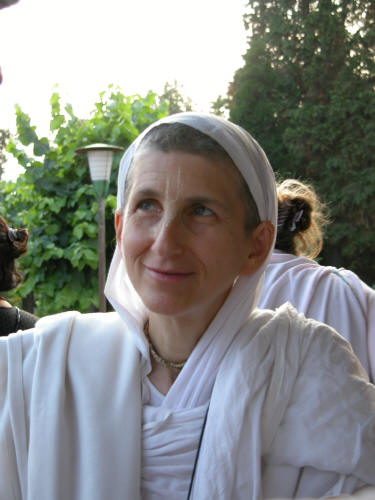
Painter and teacher in the Gauḍīya Vaiṣṇava tradition whose devotional art has illustrated the movement's scriptures for over fifty years, now teaching from her temple and gallery in Miami.
View profile →
American-born Gaudiya Vaishnava monk and ISKCON teacher, based at the Radha Gopinath Temple in Mumbai.
View profile →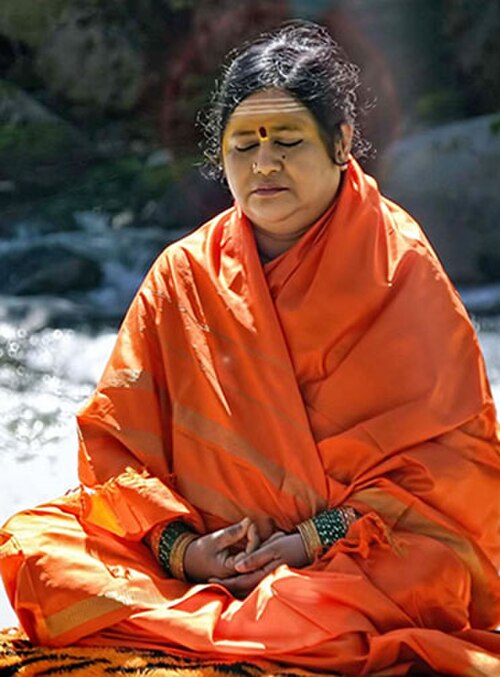
Indian spiritual teacher and humanitarian whose teachings emphasize meditation, compassion, selfless service and devotion to the Divine Mother. Amma conducts meditation retreats, individual blessings and sacred Vedic fire ceremonies during Her annual world tour.
View profile →
Indian spiritual figure known for giving silent darshan, a wordless transmission of grace, to visitors in Germany and, increasingly, on international tours.
View profile →Devotional music and chant from within this path, alongside its teachers.
American bhakti yogi and kirtan singer who spent six years in India, Nepal and Sri Lanka, and whose long droning chants helped carry Indian devotional singing into the West.
View profile →Kirtan leader, multi-instrumentalist and yoga teacher living nomadically between Bali, Japan, India and Thailand, who sings traditional mantra alongside her own melodies.
View profile →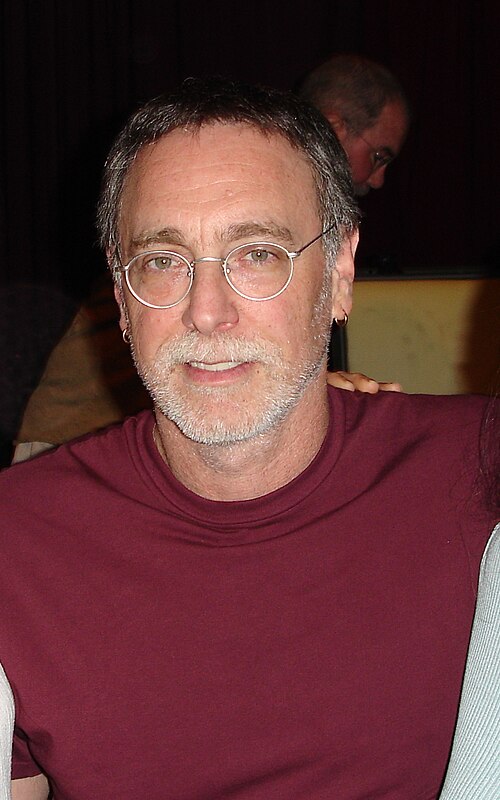
American kirtan singer in the bhakti lineage of Neem Karoli Baba, one of the most widely known Western chant leaders.
View profile →Canadian kirtan group founded in Montreal in 1998, whose sung Sanskrit mantra is carried on harps, oud, bouzouki and flute as much as on the harmonium.
View profile →Indian dhrupad singer, born in Ujjain in 1966 and living and teaching in Pune, who trained with Ustad Zia Fariduddin Dagar and Ustad Zia Mohiuddin Dagar in the guru-shishya tradition. Dhrupad is among the oldest forms of North Indian classical singing; it is not liturgy or kirtan, but its roots are devotional, and sound itself, nada, is held as a practice rather than a performance.
View profile →
Folk singer from the village of Janana in Kutch, Gujarat, born in 1955, and the eleventh generation of singers in his village. He sings the poetry of Kabir, Mirabai and Ravidas in the kafi, the form carried in the Sindhi Sufi tradition of Shah Abdul Latif Bhittai. He began singing at satsangs at eight years old, going along with his father and his grandfather, and now travels through India with a group of his nephews and his grandson.
View profile →
Indian singer in the Carnatic tradition of South India, born in Mumbai into a Tamil musical family. She learned first from her mother, Rajalakshmi Sethuraman, and then from T. Brinda, in the line of Veena Dhanammal. Alongside the classical repertoire she sings devotional song, among it the abhangs of the Marathi sants and bhajans. She holds the Padma Shri.
View profile →Indian folk singer from the Malwa region of Madhya Pradesh, born on 20 January 1970, who sings the words of Kabir in the Malvi dialect, along with Mira and other poets of the sant tradition, to the traditional tunes of the region. He began his working life as a farm labourer.
View profile →Indian acharya of the Vallabh Sampradaya, the Pushtimarg tradition, and a Hindustani classical singer. He is an acknowledged expert of Haveli Sangeet, the temple music that has been sung for Krishna in the havelis for centuries, and of the padas that belong to it, alongside khayal, dhrupad, dhamar and prabandh gayaki.
View profile →Indian devotional singer from Karnataka, born on 10 July 1952, who sings the Haridasa songs, the devotional poetry of saints such as Purandara Dasa, in Kannada, Sanskrit and Tulu, alongside Carnatic classical music. He was the pontiff of the Subrahmanya Matha in the Madhva tradition and in 1997 set the sanyasa aside to live as a singer.
View profile →Singer living on the west coast of Ireland whose work moves between sacred chant, traditional Irish folk and long meditative soundscapes, performed with an ensemble drawn from Ireland, Spain and the United States.
View profile →Gaudiya Vaishnava devotional singer who grew up in an ashram community in the United States and trained formally in Indian classical voice in Vrindavan.
View profile →
Indian singer, born in Pune on 12 January 1976, who trained with Pandit Jitendra Abhisheki of the Agra gharana in the gurukul way. His concert series Abhangwari is built on the abhang, the devotional verse of the Warkari tradition of Maharashtra, whose poets are sung on the pilgrimage to Vitthal at Pandharpur. He also sings classical and semi-classical repertoire.
View profile →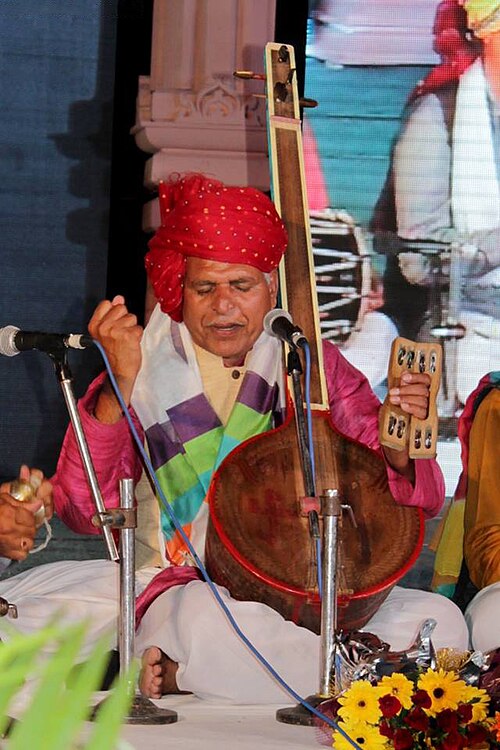
Indian folk singer from Madhya Pradesh who performs the bhajans of Kabir in the Malwi folk style, with a group of tambura, khartal, manjira, dholak, harmonium, timki and violin players.
View profile →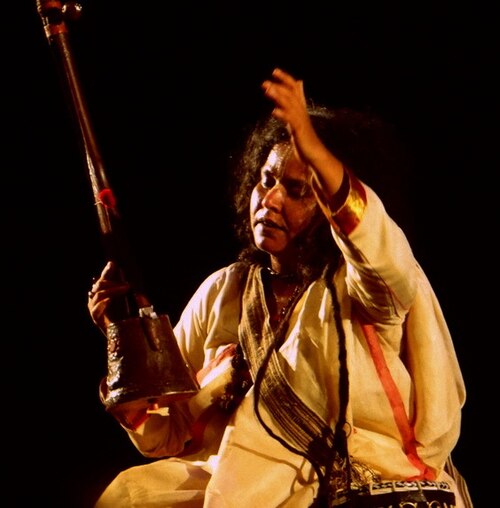
Baul singer, musician and storyteller from Bengal, trained under Baul gurus and performing since 1995, who sings and dances to her own ektara and duggi.
View profile →Folk singer from Jaipur in Rajasthan who sings mand and bhajan and plays the dhol, dholak and tabla.
View profile →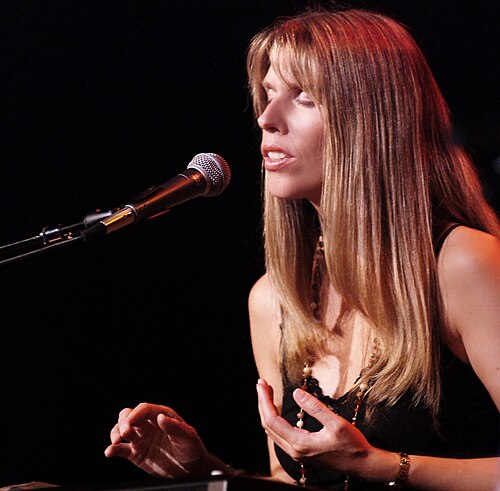
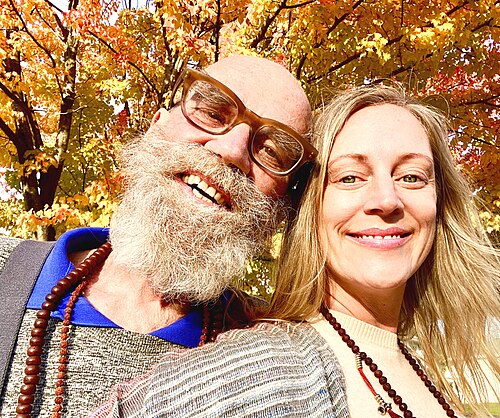
German-born vocalist Deva Premal and English guitarist-composer Miten have performed sacred mantra music together for over three decades, becoming one of the most widely heard voices in contemporary kirtan.
View profile →Kirtan artist within the Neem Karoli Baba (Maharaji) lineage, known for a warm, devotional chanting style rooted in decades of practice within that community.
View profile →Kirtan musician and storyteller raised in temple communities within the Gaudiya Vaishnava tradition, known for blending traditional Indian devotional music with Western instrumentation.
View profile →A younger-generation touring kirtan group blending traditional Gaudiya Vaishnava devotional roots with a modern musical sound, led by founder Vijay Krsna.
View profile →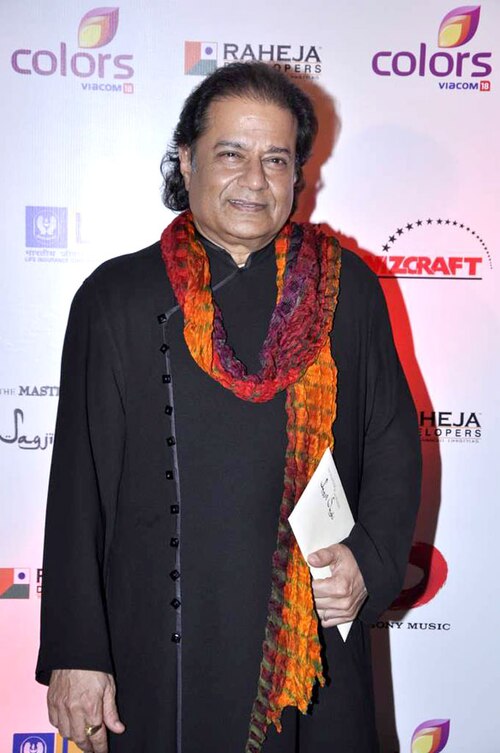
Celebrated Indian playback and bhajan singer, widely known as 'Bhajan Samrat,' with an international touring and recording career spanning five decades.
View profile →Australian mantra duo of Penny and Jethro Williams, whose devotional music sets Sanskrit mantra against shakuhachi, bansuri, whistles and guitar.
View profile →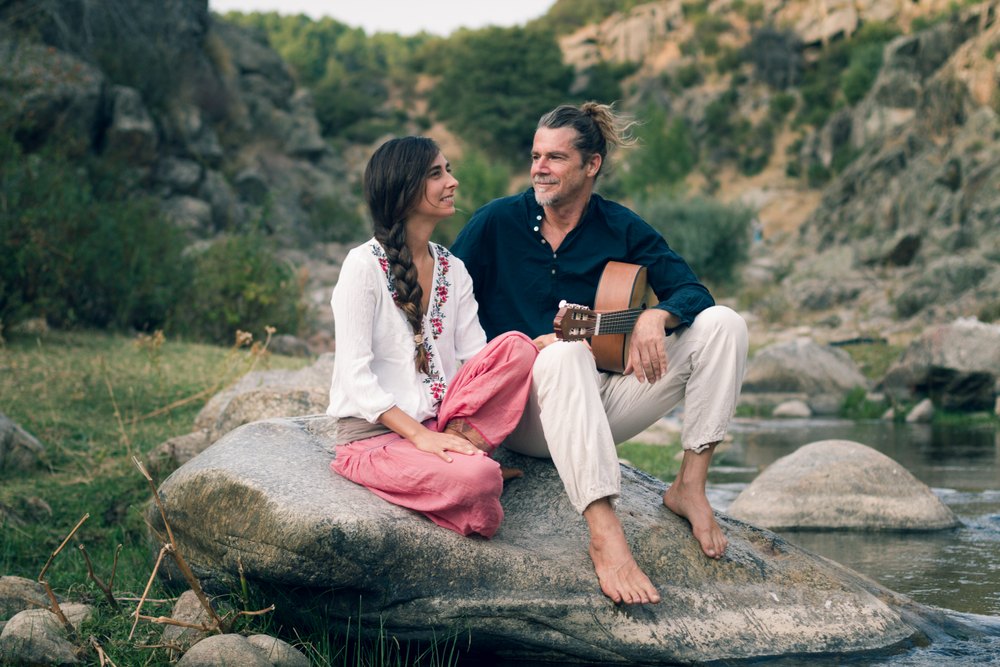
Australian singer-songwriter travelling with Susana on harmonium and voice, leading Heartsong Chanting Circles worldwide with mantras from many traditions alongside his own English-language “heartsongs”.
View profile →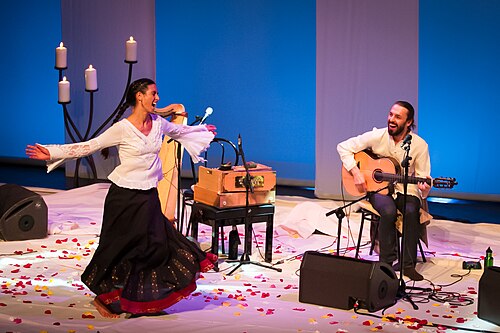
Duo of Markus Sieber and Angelika Baumbach, joining Gurmukhi mantra from the Kundalini Yoga tradition to original songs in English and Spanish.
View profile →Barcelona-based kirtan artist whose devotional chant grows out of the Bhakti Yoga path in continuous contact with Advaita Vedanta.
View profile →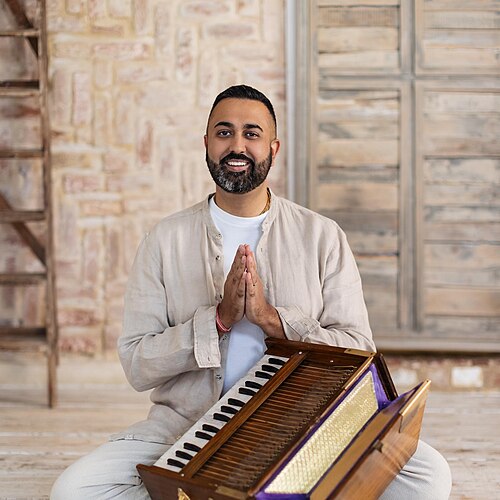
London-based kirtan artist and bhakti yoga teacher who fills concert halls with call-and-response chant rooted in Vedic devotional practice.
View profile →American vocalist known as 'the Queen of Soul Kirtan,' blending gospel and soul traditions with call-and-response devotional chant.
View profile →Long-established American mantra and kirtan musician, recording and touring internationally for over three decades.
View profile →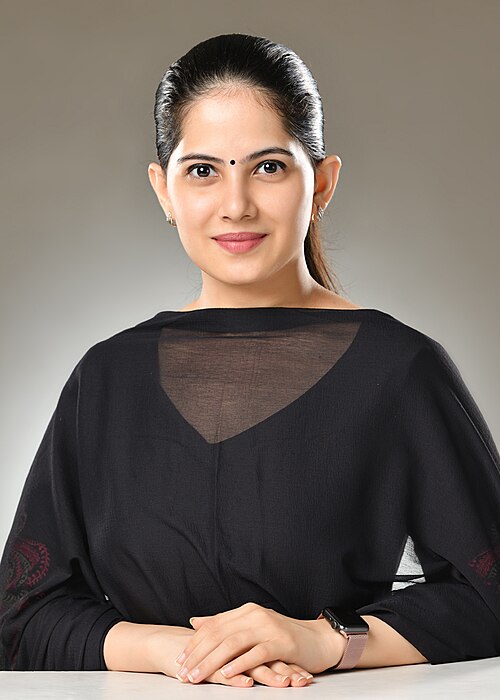
Devotional singer and storyteller from Rajasthan known across India for Bhagwat Katha and Ramayana storytelling sessions blending bhajan, discourse and everyday life advice, drawing enormous young audiences.
View profile →Kirtan and mantra musician who spent five years as a monk before turning to music, blending Sanskrit chant with a background in jazz improvisation.
View profile →Singer-songwriter whose mantra medicine music blends kirtan and Sanskrit chant with folk, world rhythms, and Spanish medicine songs.
View profile →Kirtan duo of Heather and Benjy Wertheimer, based in Portland, Oregon, performing sacred chant rooted in Hindu and Buddhist devotional traditions.
View profile →Oregon-based mantra music duo known for English devotional lyrics woven with Vedic mantras, alongside kirtan, bhajan, and an electronic fusion they call "Kirtronica."
View profile →Grammy-nominated kirtan artist known for high-energy, ecstatic yoga music, and for his research into the neuroscience of mantra and chant.
View profile →Indian composer and singer living in Switzerland who plays tabla, harmonium, keyboard and santoor, and has published more than thirty albums of mantra, kirtan and raga.
View profile →American composer and producer living in Britain, whose Sacred Chants series set Sanskrit mantra in arrangements that keep the chant at the centre.
View profile →
British kirtan musician and violinist born in 1987, raised in the Gaudiya Vaishnava bhakti tradition at Bhaktivedanta Manor in England. For close to twenty years she has offered voice and violin in mantra kirtan and original devotional music around the world. Her album Into the Forest is nominated for Best New Age, Ambient or Chant Album at the 2026 Grammy Awards.
View profile →Indian Carnatic vocalist (1916–2004) and the defining voice of South Indian devotional music in the twentieth century. She was the first musician to receive the Bharat Ratna, and her renderings of the Venkateswara Suprabhatam and the Bhaja Govindam are still heard daily in homes and temples across India and beyond.
View profile →
Indian dhrupad singer, born in New Delhi on 22 April 1968, who represents the twentieth unbroken generation of the Dagar family and its Dagarvani style. Dhrupad is the oldest surviving form of Hindustani classical singing: slow, unhurried, with each note given room before the next. It is art music rather than liturgy, but its roots are devotional and sound itself, nada, is treated as the practice.
View profile →Tamil Shaiva temple singer, an othuvar, born as Sarangapani in Alathur. He sings the Thevaram and the Thiruvachagam, the Tamil Shaiva hymns, during the daily rituals of the temple rather than on a concert stage. He trained at the Thevaram schools of the Dharmapuram Aadheenam and has served since 1975 as full-time othuvar at the Murugan temple of Tiruttani.
View profile →Manipuri guru, born on 15 January 1956 in Mayang Imphal, one of the few living holders of the Manipuri Nata Sankirtana: the Vaishnava temple singing for Krishna, carried with drum and dance, which UNESCO lists as intangible cultural heritage. He heads the Pala Loishang, the body of singers of the Shri Shri Govindajee temple in Imphal.
View profile →
Indian documentary maker, singer and cultural worker from Bangalore, artist in residence at the Srishti Institute. In 2002 she founded the Kabir Project, two decades of travelling through Malwa, Rajasthan, Gujarat, Punjab and Pakistan to record the living folk traditions around the fifteenth-century mystic Kabir.
View profile →Indian Sufi folk singer from Pugal, near Bikaner in Rajasthan, of the semi-nomadic Mirasi community, who have carried the oral tradition of Sufiana Qalam in India. He is the twenty-sixth generation of a family of Sufi musicians going back some eight hundred years, and sings the mystical poetry of Kabir, Mira and the Sufi poet Bulleh Shah in the shrine tradition of northwest Rajasthan, which has few singers left.
View profile →Kirtan and mantra singer based in the Netherlands, teaching in Zutphen and Wichmond. Her work sits where bhakti meets non-duality: chanting as a way into silence rather than as performance.
View profile →
Papia Das Baul is a Baul singer and disciple of Purna Das Baul who spent over twenty years among the Bauls and fakirs of rural Bengal. She is based between India and Prague. The Baul path is a tradition of its own, related to but distinct from mainstream Bhakti.
View profile →Singers Bindhumalini Narayanaswamy and Vedanth Bharadwaj perform the songs of Kabir and other Bhakti poets. Their album "Suno Bhai" is devoted to Kabir, and they appear regularly at the Kabir Yatra in Madhya Pradesh.
View profile →Son of Njeralath Rama Poduval, Harigovindan sings sopana sangeetham, the temple music of Kerala sung at the steps of the sanctum and rooted in Jayadeva's Gita Govinda.
View profile →
Grammy-nominated American kirtan musician blending bhakti chant with world music influences from his travels in India.
View profile →Sooryagayathri is a Carnatic-trained singer from Kerala who performs Hindu devotional music: bhajans, Sanskrit shlokas and compositions of saint-poets. She tours in India and abroad.
View profile →Bada Haridas is a kirtan singer and a disciple of A.C. Bhaktivedanta Swami Prabhupada. In 1975 he left a career in music to live as a monk at the Hare Krishna ashram in Los Angeles, and he has led and taught kirtan for about fifty years since. He studied music composition at the University of Southern California, has sung for years at the temple in Alachua, Florida, and leads kirtan and workshops internationally.
View profile →
Bengali Baul singer born in 1961 in Murshidabad, West Bengal, trained among Sufi fakirs and initiated into the Baul tradition by Subal Das Baul. He is a master of the dubki, the small frame drum that drives Baul song, and his music holds together the tantric Buddhism, Vaishnavism and Sufism that meet in Baul mysticism. Recordings on Real World Records brought the tradition to listeners far outside Bengal.
View profile →Visvambhar Sheth grew up in a Vaishnava devotional community and began leading kirtan in early childhood. He plays the mridanga and other instruments, sings lead with The Mayapuris and also performs with The Hanumen, and teaches through Art of Kirtan, his online school. He hosts pilgrimages and retreats as well, from the Himalayas to the Kumbha Mela.
View profile →
Classically trained vocalist and composer working in world music and devotional song, singing in Sanskrit, Dravidian languages and English, and drawing her own East African and Indian heritage into contemporary composition.
View profile →Vipul Rikhi is a singer, poet, writer and translator who works with the oral traditions of Kabir and other Bhakti and Sufi poets, singing their poetry in the folk music tradition. His books include "Drunk on Love", on Kabir's life and thought, and "One Palace, a Thousand Doorways". He performs and leads singing workshops in India and abroad.
View profile →
Pelva Naik, born in Ahmedabad in 1986, is a Dhrupad singer of the Dagar tradition. She became a disciple of Ustad Zia Fariduddin Dagar after attending his workshop at the age of seventeen, also learned from the rudra veena player Ustad Bahauddin Dagar, and studied full-time at the Dhrupad Gurukul in Panvel. She performs and teaches in India and abroad.
View profile →
American Kundalini Yoga-trained chant artist in the 3HO/Sikh-inspired tradition of Yogi Bhajan, known for mantra-based devotional music.
View profile →Donna De Lory, born in 1964, toured the world for many years as a backing singer and dancer for Madonna before turning to yoga and devotional music. She sings mantras and kirtan, often in call and response, on albums such as "The Lover and the Beloved", "Sanctuary" and "The Unchanging", and performs at kirtan gatherings and concerts. Her recent recordings include a version of "Om Namah Shivaya" with Krishna Das.
View profile →GuruGanesha Singh is a singer and guitarist of devotional music, based in Herndon, Virginia. In 2000 he founded the record label Spirit Voyage, which released the first albums of Snatam Kaur. He has recorded with singers including Snatam Kaur, Nirinjan Kaur and Tina Malia, and now leads the GuruGanesha Band, which sets kirtan and mantra alongside electric guitar, raga, folk and blues.
View profile →Porter Singer, who records sacred music under the name Sirgun Kaur, sets mantras to melodies of her own. She has been singing them at festivals, concert halls and yoga studios in the United States and Europe since 2011, across eleven studio albums. Her recent release "Mool Mantra Awakening" is built on the Mool Mantar, the opening mantra of the Sikh scriptures, and she also publishes teaching material for the harmonium.
View profile →David Lurey was born in Asheville, North Carolina, in 1973 and lives in Palma de Mallorca. He came to mantra singing through the kirtan singer Jai Uttal, and now works as a musician, yoga teacher and organiser of retreats and festivals. His album "Global Bhakti Project" brings together musicians he met while travelling and teaching.
View profile →Nirinjan Kaur grew up in Vancouver in a Sikh family who practised Kundalini yoga; her mother, Guru Raj Kaur Khalsa, is also a kirtan singer. She sings mantras and devotional songs from the Sikh and Kundalini yoga traditions, and has recorded several albums, including "From Within" with the cellist Matthew Schoening.
View profile →
Indian classical vocalist of the Patiala gharana (born 1980), daughter and student of Ajoy Chakraborty. She sings khayal, thumri, dadra and bhajan, and won the BBC Radio 3 Award for World Music in the Asia-Pacific category in 2005. Her devotional singing sits inside the classical form rather than beside it.
View profile →
Carnatic vocalist from Chennai (born 1968), awarded the Sangeetha Kalanidhi of the Madras Music Academy in 2015 and widely held to be the leading singer of his generation. He is known for singing Tamil devotional poetry that had fallen out of the concert repertoire, and for full-length kutcheris that run close to three hours.
View profile →Retreats, dialogues and online gatherings connected to this path.
Online · Weekly online kirtan
Online · Monthly online class
Online · Weekly satsang
Online · Weekly satsang (Spanish)
Talks and conversations from teachers within this path.
One kriti given the full treatment, thirty-eight minutes on a single piece.
Nearly three hours: a complete Carnatic concert, which is how the form is meant to be heard.
A 2013 concert of raagprodhan, the Bengali song form built on classical ragas.
An hour and ten minutes in Raag Jog, from her own channel.
Voices from this path and the schools within it, playing from the platforms the teachers publish on.
Radhika Das devotes an hour of his own podcast to what he thinks contemporary kirtan gets wrong and what the practice is actually for.
From the podcast For Soul's Sake
A guided meditation led by Sadhvi Bhagawati Saraswati, recorded at the Sivananda ashram in the Bahamas.
From the podcast Ask Sadhviji
Sadhvi Bhagawati Saraswati answers listener questions on liberation, life purpose and the role of a guru.
From the podcast Ask Sadhviji
An episode of Ask Sadhviji in which she responds to questions about addiction, anxiety and anger.
From the podcast Ask Sadhviji
The source text beneath this path, free to read.
Swami Vivekananda's own systematic teaching on the path of loving devotion.
The language of surrender is central to bhakti and can be genuinely liberating — but the same language has historically been used to justify the abuse of spiritual authority. Devotion to a teacher is not the same as obedience to one.