
39 min
Talk · Joel Morwood
The Purpose of the Spiritual Path
What the path is actually for, which is not what most people come looking for.
Direct contemplation of awareness, identity and the experience of separation.
The word "non-duality" describes a family of teachings rather than one single organisation or method. At their clearest, these teachings question the assumption that experience is divided into a separate observer on one side and an external world on the other.
Some teachers work through careful self-inquiry. Others emphasise meditation, silence, dialogue or ordinary daily life. Approaches can overlap, but they are not identical; Paths Are Many presents them together to help visitors compare context and practice without erasing their differences.
What is aware of this moment before it is named, interpreted or turned into a personal story?A central teaching within Non-duality
Compare background, approach and format before choosing a teacher to follow.

Yogi and founder of the Isha Foundation, known for the Inner Engineering programme and global environmental campaigns such as Save Soil.
View profile →American teacher and creator of The Work, a method of self-inquiry built around four questions applied to stressful thoughts.
View profile →British teacher and author writing on non-duality, uncertainty and ordinary life, currently teaching mainly online after a period of serious illness.
View profile →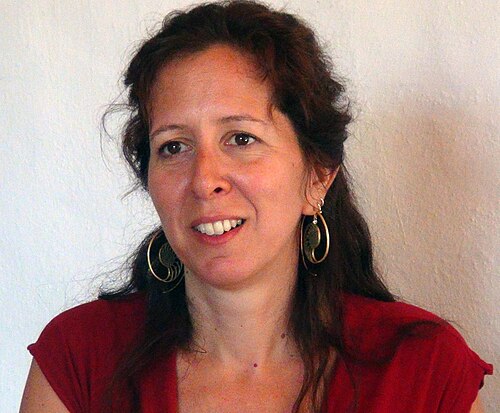
British teacher offering non-dual inquiry framed as an invitation to 'die to love': the dissolution of the separate self into what remains.
View profile →Founder of the Diamond Approach, a contemporary path integrating Sufi, Buddhist and psychodynamic insight with Western developmental psychology.
View profile →American teaching duo blending non-dual awareness with an emotionally-focused, heart-centred style summarised in Matt's phrase 'love everything', teaching jointly as Matt & Joy Kahn.
View profile →Retreats, dialogues and online gatherings connected to this path.
Tiruvannamalai, India · Satsang, Monday to Saturday
Alachua, Florida, United States · Weekly service & talks
Online · Weekly online prayer circle
Online · Weekly online transmissions (multiple sessions per week)
Talks and conversations from teachers within this path.
What the path is actually for, which is not what most people come looking for.
On the word God for people who have no use for it, and what it points at anyway.
An hour of questions, answered without smoothing over the hard parts.
An hour on knowledge that is not information, from the centre he founded in Oregon.
Voices from this path and the schools within it, playing from the platforms the teachers publish on.
Sahajananda looks back over four decades of daily practice and what has and has not changed in it.
From the podcast The Hridaya Podcast: Living with an Open Heart
Scott Kiloby argues that spiritual practice which stays in awareness alone leaves the body's stored emotion untouched.
From the podcast Scott Kiloby's Podcast - Natural Recovery from Suffering
An episode on how spiritual seeking can function as avoidance of unprocessed emotion rather than as a resolution of it.
From the podcast Scott Kiloby's Podcast - Natural Recovery from Suffering
Sahajananda describes what long stretches of solitude and total darkness showed him about the mind.
From the podcast The Hridaya Podcast: Living with an Open Heart
The source text beneath this path, free to read.
William James's classic study of mystical and religious experience across traditions.
Statements such as "there is no person" or "nothing needs to change" can be illuminating in contemplative inquiry, but confusing or harmful when used to dismiss boundaries, trauma or ordinary care.