
45 min
Music · Jeremy Dutcher
Live at Massey Hall
A full Massey Hall concert, filmed by CBC.
Ritual, connection with nature and symbolic journeys within living traditions.
Shamanism refers to a wide range of living traditions in which practitioners mediate between community, nature and the unseen through ritual, ceremony and symbolic journeying.
These traditions remain rooted in specific places, lineages and communities. Paths Are Many approaches this material with particular care for context, consent and the ethics of representation.
What is asked of us by the place we stand on, and the ancestors we stand behind?A central teaching within Shamanism
Compare background, approach and format before choosing a teacher to follow.
Medical anthropologist and founder of the Four Winds Society, teaching Peruvian and Andean shamanic energy-medicine practice.
View profile →American teacher of Toltec wisdom and founder of Warrior Goddess, trained under don Miguel Ruiz, now also focused on climate stewardship.
View profile →South African animal communicator trained at the Assisi International Animal Institute, best known for the 2013 documentary The Animal Communicator and for her pro bono work with wildlife rehabilitation and conservation projects.
View profile →Nigerian-born writer, psychologist and postactivist thinker known for his work on slowness, fugitivity and the more-than-human world.
View profile →American shamanic teacher and counselor based in Sedona, Arizona, offering vision quests, retreats and one-on-one shamanic healing through his "Medicine of One" path rooted in Native American shamanic tradition.
View profile →Head healer and co-founder of Intronaut in Vancouver, known for plant medicine ceremonies, including the 5-MeO-DMT-based Jaguar Ceremony, combined with breathwork and his own non-dual framework called The Middle Point.
View profile →Devotional music and chant from within this path, alongside its teachers.
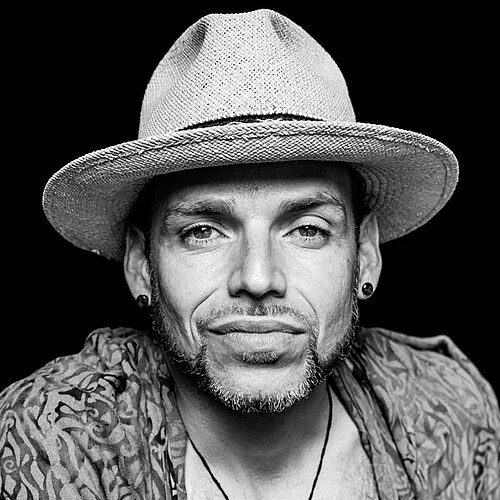
Brazilian-born multi-instrumentalist based in Arizona who builds each performance alone and in real time with looping, layering world percussion, voice, didgeridoo and pre-Columbian flutes into music he offers as ceremony.
View profile →
Tuvan throat-singing ensemble from southern Siberia, formed in 1992 and the best-known carriers of Tuvan music beyond their own republic. Their khöömei draws several notes from a single voice and imitates the sounds of the land it comes from, wind, water and animals, a practice bound up with addressing the spirit-masters of those places.
View profile →
Tuvan throat-singing ensemble from Kyzyl, trained in the strictest forms of the tradition as students of the master singer Kongar-ool Ondar. They sing khöömei and play the traditional instruments of Tuva, and they tour internationally with a full concert schedule while keeping the music in the shape they were taught it.
View profile →
Native American flutist of Navajo and Ute descent, born in 1946, and the most widely heard player of the cedar flute. He carries the ceremonial and storytelling use of the instrument and has also taken it into orchestral and jazz settings; his Canyon Trilogy was the first Native American flute recording to reach gold.
View profile →
Kumu hula, singer and composer from Maui, born in 1962, who carries the Hawaiian oli and the hula lineage he was trained in, and founded the halau Ke'alaokamaile to teach it.
View profile →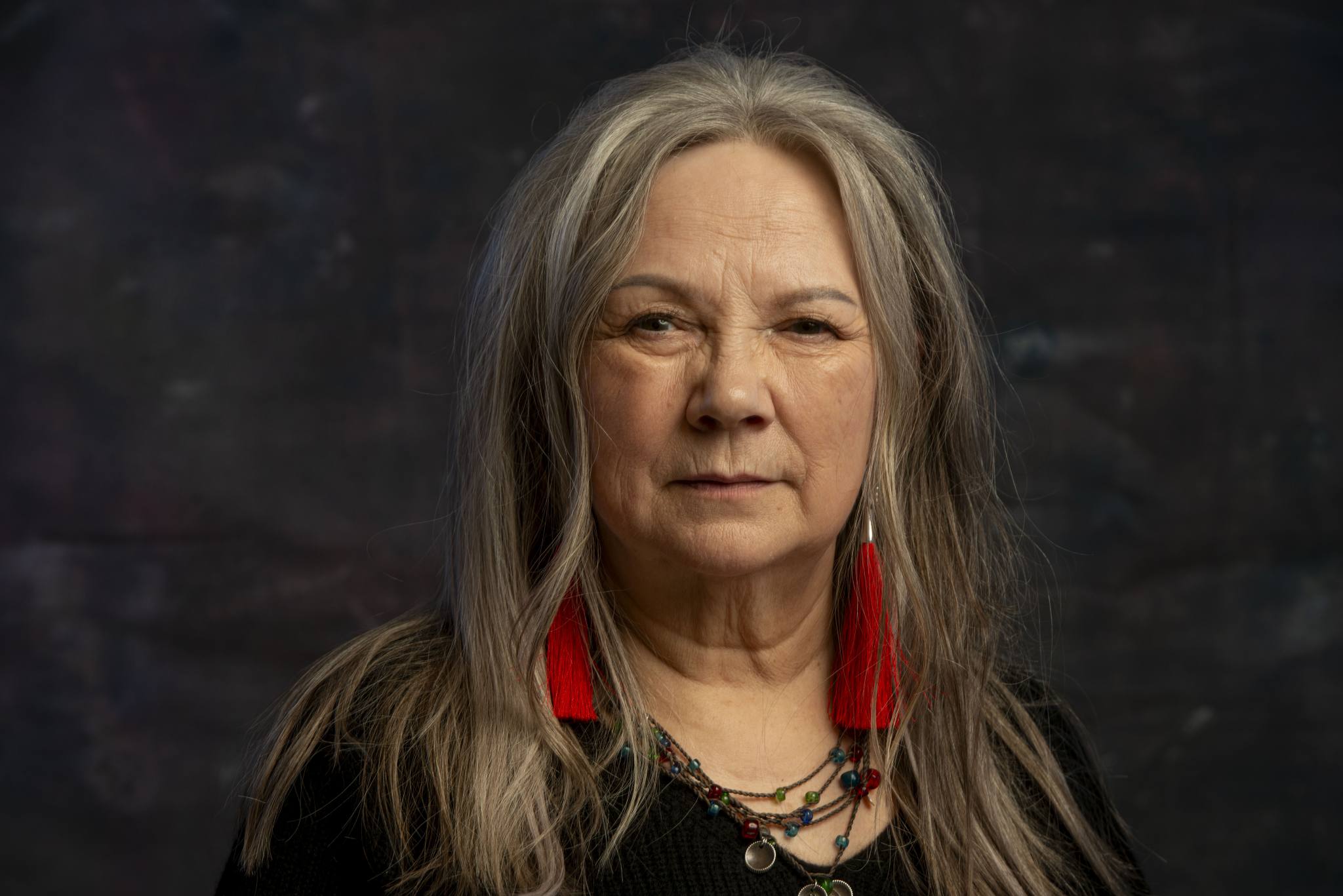
Sámi singer from Karasjok in northern Norway, born in 1956, and the best-known voice of the joik. A joik does not describe its subject but calls a person, animal, place or spirit into presence, and it grew out of a Sámi understanding of the world as kin rather than scenery. She sings it alongside jazz and rock without letting go of what it is.
View profile →
South Sámi singer from Hedmark in Norway, born in 1995, who sings vuelie, the joik tradition of the South Sámi. Joik is a way of calling a person, an animal or a landscape into the room rather than singing about them, and it carries belonging as much as melody. The South Sámi branch is smaller and more endangered than the northern one, and she is one of the voices bringing it back.
View profile →
Tuvan singer born in 1957 near the Mongolian border, with a range spanning some seven octaves. She is one of very few women to carry Tuvan throat singing to an international audience.
View profile →
Singer and actress of the Sakha, the people of Yakutia in northeastern Siberia, born in 1950 in the village of Nakhara in the Megino-Kangalassky district. She trained as an actress and has been with the Sakha Academic Theatre in Yakutsk since 1974. From the 1980s she sang in its productions using toyuk, the improvised epic singing of the Sakha, and from the 1990s she has toured abroad as a folk singer.
View profile →
Sámi singer and joiker, born in Inari in 1971 and from the village of Angeli in northern Finland. She began in the 1980s with Angelin tytöt and went her own way after the group's first album in 1992. She sings the joik, the Sámi vocal tradition in which a person, an animal or a place is not sung about but sung: the joik is held to carry the thing itself, and with it a bond to the land and to those who came before.
View profile →Indigenous singer from the Sakha Republic in Arctic Siberia, and an Honored Artist of the Republic. She carries the song of the peoples of the Russian Arctic, Sakha, Evenk, Even, Dolgan, Chukchi and Yukaghir, in their own languages and their own timbre rather than smoothed into concert style, accompanying herself on the khomus and the drum.
View profile →Marewrew is an Ainu women's vocal group, performing officially since 2010, that sings upopo, the traditional round songs of the Ainu, mostly a cappella. Ainu song belongs to a tradition of its own, related to but distinct from shamanism.
View profile →
Ánde Somby is a Sámi joiker rooted in the reindeer-herding joik tradition, performing since 1976 and also a professor of law in Tromsø. Joik is a tradition of its own, related to but distinct from shamanism.
View profile →
Musician, flute maker and flute player of Taos Pueblo in New Mexico, born in 1966. He was raised in the tradition, speaks Tiwa, lives and works at the pueblo and takes part in its ceremonial life. His performances weave the flute and song of his people together with storytelling and dance, and he has won a Grammy for best Native American music album.
View profile →Tito La Rosa is a Peruvian musician whose work belongs to ceremony and healing rather than to the concert hall; Spanish-language sources place him within Peru's música medicina. His recordings carry titles such as Ayawaska: Viaje de curación, Icaro: Shamanic Songs, Ayni and Ritual, and they run from 1998 through to the single Mujer Puente at the end of 2025.
View profile →
Wolastoqiyik composer and classically trained tenor from Canada. His first album was built around wax-cylinder recordings of his own nation's songs made in 1907, which he transcribed in the museum archive and then sang with; it won the Polaris Music Prize in 2018. He sings in Wolastoqey, a language with fewer than a hundred fluent speakers left.
View profile →Retreats, dialogues and online gatherings connected to this path.
Online · Weekly online radio show
Online · On-demand online programme
Online · Twice-monthly online meeting
Online · Monthly online light circle
Talks and conversations from teachers within this path.
A full Massey Hall concert, filmed by CBC.
The Tiny Desk set, with the 1907 recordings of his nation playing alongside him.
Forty minutes at the KEXP studios, voice and piano, mostly in Wolastoqey.
From 1996, on owing each other and the world something that can never be settled.
Voices from this path and the schools within it, playing from the platforms the teachers publish on.
Mark Anthony on FADE to BLACK, on after-death communication and near-death experience.
From the podcast FADE to BLACK w/ Jimmy Church Podcast
Mark Anthony as a guest on Zen Success.
From the podcast Zen Success
John Lockley on DENtalks, on his initiation into the Xhosa sangoma lineage.
From the podcast DENtalks powered by DEN Meditation
Munay is the Quechua word for love as a force; ten pieces on it.
These practices are rooted in specific communities and lineages. Context, permission and respectful representation matter more here than in most other traditions on this site.