45 min
Talk · Philip Kapleau
Fuketsu and the Dharma Seal
A teisho on case 38 of the Hekiganroku, on what cannot be handed over and is handed over anyway.
Sit down. Everything else follows.
Direct meditative practice, zazen and everyday awareness in traditions rooted in Chinese Chan and its later forms.
Zen Buddhism is a tradition of direct practice, simplicity, and close attention to ordinary experience. Emerging from Chinese Chan and later taking distinctive forms in Japan, Korea, Vietnam, and beyond, Zen places particular emphasis on meditation, awareness, and seeing into the nature of mind without relying only on concepts or beliefs.
Its practices range from silent sitting and koan inquiry to chanting, work, and everyday activity carried out with full attention. Different Zen schools have their own methods and styles, but many share the same invitation: to meet life as it is, loosen habitual ways of seeing, and discover a freedom that is not separate from this present moment.
The practice is not preparation for anything.A central teaching within Zen
Zen holds many schools and lineages beneath it. Its teachers are gathered below.
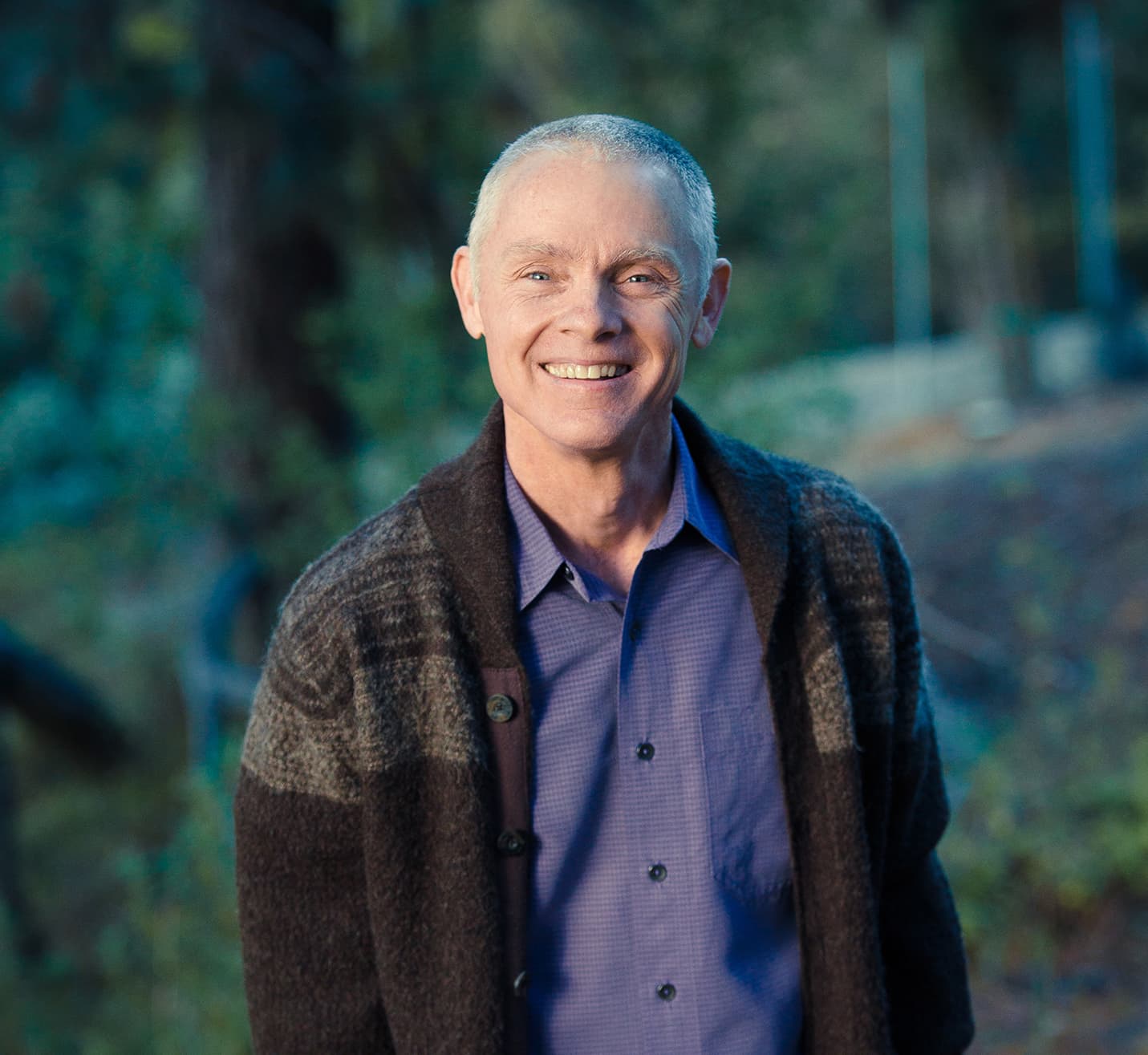
American-born spiritual teacher who has taught for over 30 years, offering teachings free of any single tradition or ideology; founder of Open Gate Sangha, now retired.
Zen calligraphic painter and teacher who works with brush, ink and rice paper, and who describes his own approach as teaching painting by not teaching painting.
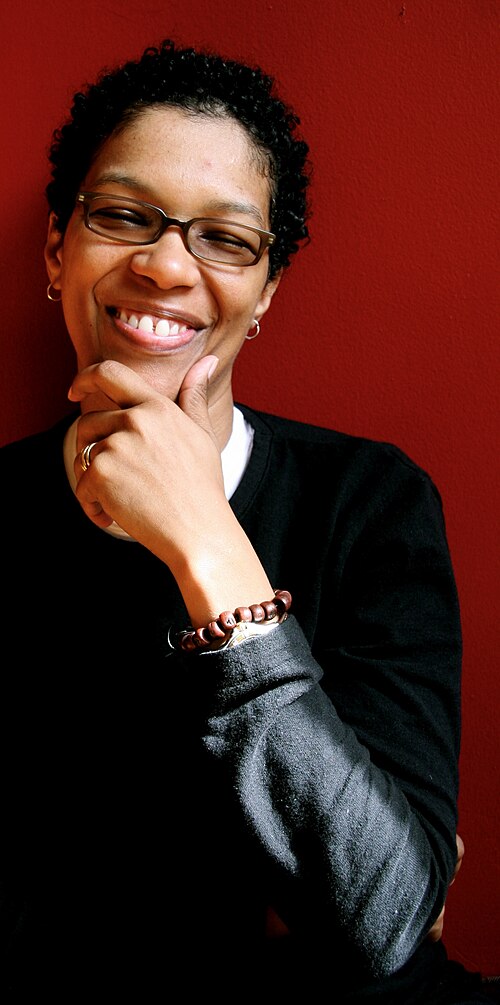
Ordained Zen teacher holding the title Rōshi, known for connecting Zen practice with social justice and structural change.

American Zen teacher (1939–2018), trained as an aeronautical engineer and a dharma heir of Taizan Maezumi. He founded the Zen Peacemakers, built the Greyston Bakery in Yonkers on open hiring so that anyone could get work, and held street retreats in which practitioners live homeless for days. He treated the street as the zendo.

American Sōtō Zen priest, author and bass player, born in Ohio in 1964. He played in the hardcore band Zero Defex, moved to Japan in the 1990s and ended up working for the studio behind Ultraman, and trained there with Gudō Wafu Nishijima, who ordained him and named him his dharma heir in 2000. He teaches from Los Angeles and writes about Zen in plain language, with little patience for its trappings.
American Zen teacher in the Sanbo Zen lineage and scholar of Buddhism and modernity, best known for linking Buddhist practice to social and ecological issues through his "ecodharma" work.
Devotional music and chant from within this path, alongside its teachers.
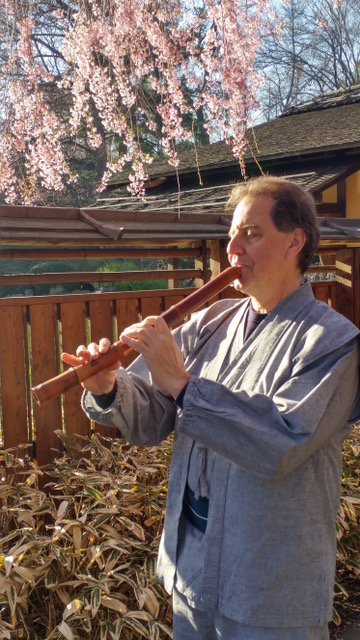
Shakuhachi grand master and composer in New York, trained in the Kinko school and certified dai shihan in 2001. He teaches the solo honkyoku, the repertoire the komusō monks of Fuke Zen played as suizen, blowing zen, where the breath is the practice rather than the performance, and he brings the bamboo flute into Western chamber music.
Japanese shakuhachi master, born in Chichibu in 1959, who plays honkyoku, the solo repertoire that came out of the practice of the Zen monks of the Edo period, in which the flute is played as meditation rather than as performance. He was the principal disciple of Yokoyama Katsuya from 1982 until Yokoyama's death in 2010, and is a senior carrier of the Watazumi and Yokoyama line.
Shakuhachi player and ethnomusicologist based in Copenhagen, who plays honkyoku, the solo repertoire of the Zen monks, on the unlacquered jinashi flute. Honkyoku is suizen, blowing zen: the breath as the practice rather than the performance. She trained in Tokyo with the master Okuda Atsuya.
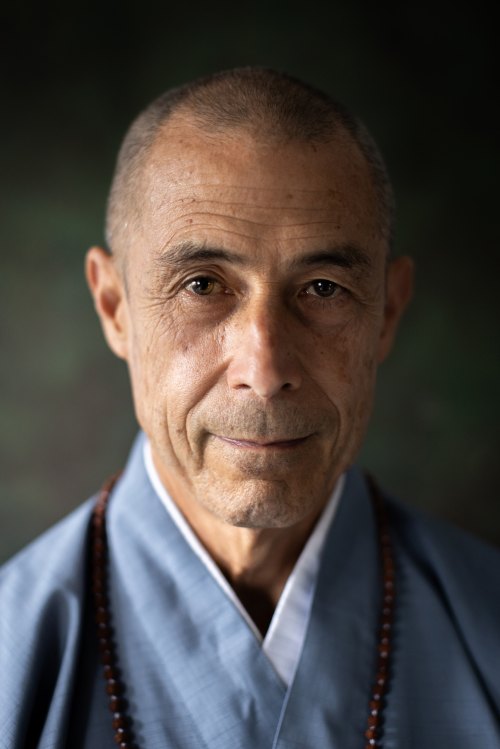
Shakuhachi grand master, granted the rank of dai shihan in 1980 and carrying two lineages back to the komusō, the wandering Fuke Zen monks for whom playing the honkyoku was not performance but suizen, blowing zen: the breath itself as meditation. Born in Texas, living in Australia, and the author of a doctorate on how that Zen repertoire is handed on.
Documentaries, interviews and talks connected to this path and its sub-paths.
A teisho on case 38 of the Hekiganroku, on what cannot be handed over and is handed over anyway.
A teisho on case 7 of the Blue Cliff Record, where a monk asks who the Buddha is and is told his own name.
A teisho on case 38 of the Mumonkan, recorded at the centre he founded.
Three minutes, answered without a single technical term.
Talks, guided meditations and podcast conversations from the teachers within this lineage.
Reb Anderson takes up the first of the ten bodhisattva practices from the Flower Adornment Scripture, joyful giving, and discusses giving without regret, without seeking honour and without attachment to the outcome.
From the podcast The No Abode Audio Archive
An afternoon talk at No Abode Hermitage on case twenty of the Book of Serenity and the thirty-year friendship of the Zen teachers Di Tsang and Fa Yan, used to explore not-knowing as intimacy.
From the podcast The No Abode Audio Archive
Drawing on chapter eighteen of the Flower Adornment Scripture, Anderson argues that nirvana and helping others are not two separate paths, and works through the bodhisattva's ten ways of practising non-negligence.
From the podcast The No Abode Audio Archive
A talk on Book 18 of the Flower Adornment Scripture and the dialogue between the bodhisattvas Vigorous Wisdom and Dharma Wisdom, on finding the balance between forcing practice and neglecting it.
From the podcast The No Abode Audio Archive
Events tagged to an unpublished school or lineage automatically remain discoverable here while that level stays unpublished.
Online · Online seminar
Herrischried, Germany · Weekend meditation retreat
Mount Tremper, New York, United States · Short intensive retreat
Jakarta, Indonesia · Question and answer gathering