208 min
Talk
Essence of Eloquence, Day One
The opening day of a teaching on Tsongkhapa's Essence of Eloquence, his treatise on how to tell the interpretable from the definitive in the Buddha's word.
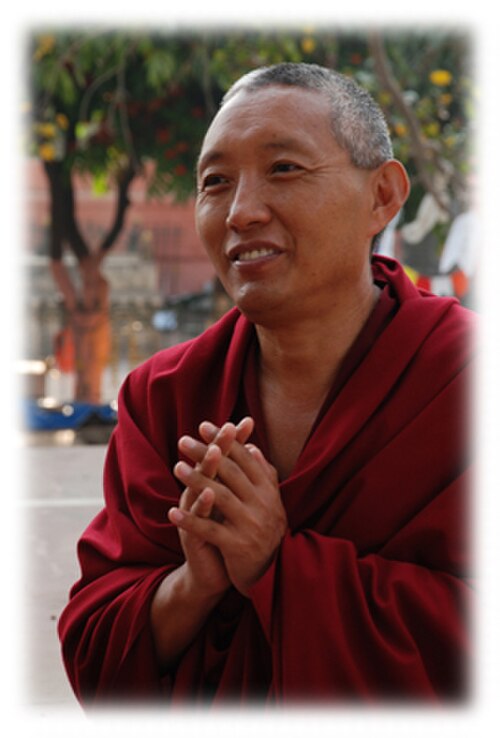 Lobsang Sherap / Wikimedia Commons (Public domain)
Gelug · 91st Abbot of Sera Mey
Tibetan scholar who taught in London for twenty-four years and built the Foundation of Buddhist Thought course, before being appointed the 91st abbot of Sera Mey monastic university.
Geshe Tashi Tsering was born in 1958 in Purang, in western Tibet, and has taught Western students since 1991. From 1994 to 2018 he taught at Jamyang Buddhist Centre in London and at its affiliated centres in Leeds and Bath.
Out of those years came the Foundation of Buddhist Thought: a structured course given both on campus and online, and a six-volume series of books under the same name. In May 2018 the Dalai Lama appointed him the 91st abbot of Sera Mey monastic university.
He is not the Geshe Tashi Tsering who teaches at Chenrezig Institute in Australia. They are two people who share a name.
“This website will help me do all these things. In this way I will keep in touch with those of you I've had a connection with for all these years.”Khensur Rinpoche Geshe Tashi Tsering
Talks, day programmes and retreats currently listed in the Paths Are Many calendar.
Short introductions and longer conversations, to hear this teacher in their own words.
The opening day of a teaching on Tsongkhapa's Essence of Eloquence, his treatise on how to tell the interpretable from the definitive in the Buddha's word.
The first evening of a beginners' course at Jamyang in London, where he was resident teacher for many years.
Talks, guided meditations and podcast conversations, playing from the platform this teacher publishes them on.
Geshe Tashi takes a line of the Dalai Lama's about treating your own body and mind as a laboratory, and works out what impermanence and interdependence look like when you actually do that.
From the podcast A Buddhist Life
Systematic philosophical study, monastic scholarship and tantric practice.
Explore the path →