
45 min
Talk · Gurudev Shree Rakeshji
Going Beyond Good and Bad Desires
Why replacing a bad wish with a good one is not yet freedom, and what lies past both.
A path of non-violence towards every living being, of truth seen from many sides, and of freedom from possessiveness.
Jainism is one of the oldest living traditions of India, rooted in the teachings of the twenty-four Tirthankaras, the "ford-makers" who crossed the river of rebirth, of whom Mahavira was the last. At its heart lie ahimsa, non-violence towards every living being, anekantavada, the recognition that truth has many sides, and aparigraha, freedom from possessiveness. Devotion takes many forms: for many Jains, worship in temples before the images of the Tirthankaras; for others, a practice without images centred on meditation and the words of the teachers; and for all, the Navkar Mantra recited daily, sung stavans and bhajans, and the yearly days of Paryushan and Das Lakshana, a time of fasting, reflection and asking forgiveness.
If truth has many sides, your own view is one of them.A central teaching within Jainism
Compare background, approach and format before choosing a teacher to follow.

Gurudev Shree Rakeshji, born in 1966 in Mumbai, is a spiritual teacher in the Jain tradition of Shrimad Rajchandraji, the 19th-century mystic and poet who was also a guide to Mahatma Gandhi. He holds a doctorate in philosophy for research on Shrimad Rajchandraji's Atmasiddhi Shastra. He founded Shrimad Rajchandra Mission Dharampur, with its ashram in Dharampur in southern Gujarat and centres on six continents, and teaches meditation, devotion and self-inquiry.
View profile →Samani Punya Pragya is a samani, a member of the order of Jain female renunciants established within the Terapanth tradition in 1980, whose members, unlike monks and nuns, may travel abroad to teach. She is a disciple of Acharya Mahashraman, holds master's degrees in Prakrit and English literature, and teaches Jain philosophy, comparative religion and Preksha meditation, including as a lecturer in religious studies at Florida International University. Based at the JVB London Centre, she also sings and composes, and has recorded five albums of devotional songs.
View profile →Samani Pratibha Pragya is a samani in the Svetambara Terapanth tradition and a teacher of Preksha meditation and yoga. In 2017 she completed a doctorate at SOAS, University of London, on the history and methods of Preksha meditation, and she has taught as a visiting professor at Florida International University and worked as a visiting research fellow at SOAS. She founded the JVB Jain World Peace Centre in London, where she teaches Jain philosophy, meditation and yoga, and she lectures on Jain practice in the United Kingdom and abroad.
View profile →Acharya Lokesh Muni, born in 1961 in Pachpadra, Rajasthan, is a Jain monk, writer and speaker. He founded Ahimsa Vishwa Bharti, an organisation that works for non-violence, interfaith dialogue and social reform, and he speaks about ahimsa and harmony between religions in India and abroad. He has received India's National Communal Harmony Award.
View profile →
Acharya Mahashraman, born in 1962 in Sardarshahar, Rajasthan, has been the eleventh Acharya and head of the Svetambara Terapanth order since 2010, succeeding Acharya Mahapragya. He guides the order's monks, nuns and samanis, and leads its programmes of Anuvrat, small vows of ethical living, Preksha meditation and Jeevan Vigyan, the Science of Living. Travelling on foot, as Terapanth monks do, he has led a long Ahimsa Yatra, a journey for non-violence, through India, Nepal and Bhutan. He teaches mainly in Hindi.
View profile →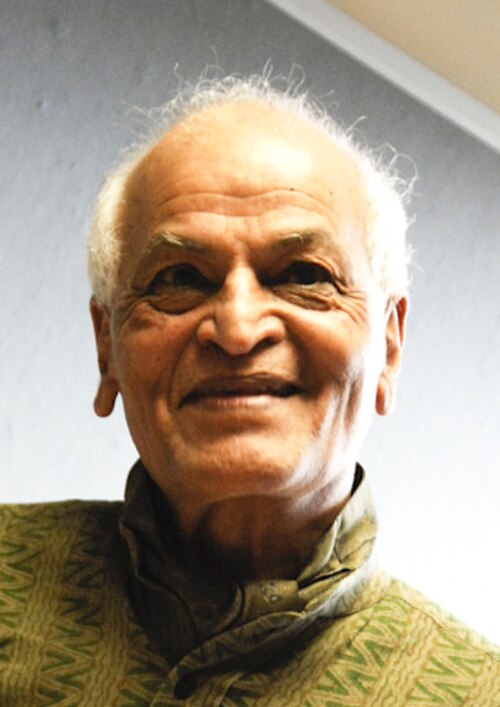
Indian-British peace and ecology activist and former Jain monk, known for his 8,000-mile peace walk to the capitals of the nuclear powers and for founding Schumacher College.
View profile →Devotional music and chant from within this path, alongside its teachers.
Retreats, dialogues and online gatherings connected to this path.
Dharampur, India · Satsang shibir
Dharampur, India · Deep dive
Mumbai, India · Discourse
Dharampur, India · Satsang shibir
Talks and conversations from teachers within this path.
Why replacing a bad wish with a good one is not yet freedom, and what lies past both.
What to do with adversity when it cannot be changed, drawn from the teaching of Shrimad Rajchandraji.
On what a human birth is for, in the Jain reading of it, and what wastes it.
A record of a pilgrimage through Kutch led by Bhaishree with seekers from the Raj Saubhag ashram.
Ask first which branch someone teaches from, Svetambara or Digambara, because they differ on monastic practice and on texts. Ask next whether the teacher is a monk, a nun, a samani or a lay teacher, since what each may do and where each may travel is not the same. Lay teachers reach far more people outside India, and that is a real role within the tradition rather than a substitute for it.